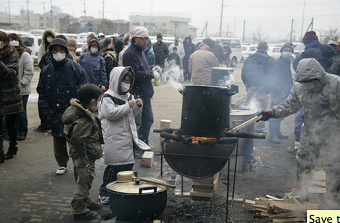
Now that almost two months have passed since the earthquake, there is a gradual switch to more long term recovery efforts. Here are only a few of them:
Shanti Volunteer Association
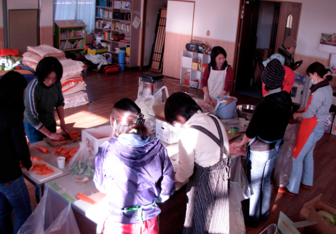
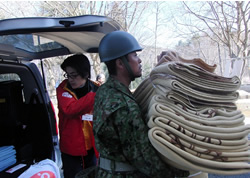
Shanti recently gave assistance to local schools who needed to clean their facilities for the new school year, which started on April 21st.
Starting from April 17th, the 100+ volunteers who gathered helped hose down the place, dispose of the unusable dirty material, and collect/return the usable teaching materials to their proper locations. Workers desperately wanted to get this done by the entrance ceremony, where the children would be able to have a fresh start.
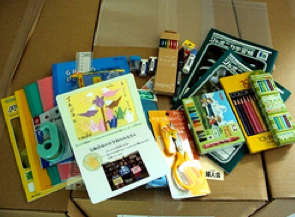
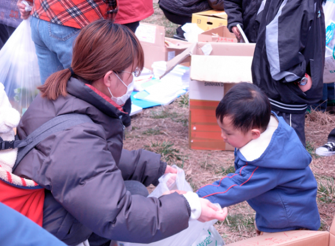
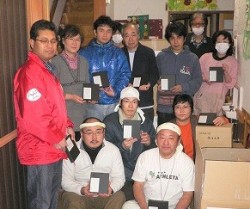
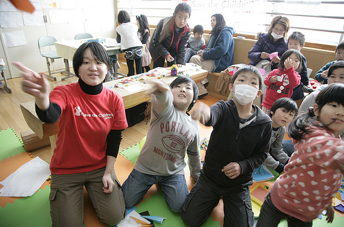
Also necessary for these students are the proper school supplies, which mostly got lost after the quake. Shanti prepared a “study materials set” including 19 items such as notebooks and pencils, and distributed them to 11 elementary schools in Kesen-numa city to 1764 students total.
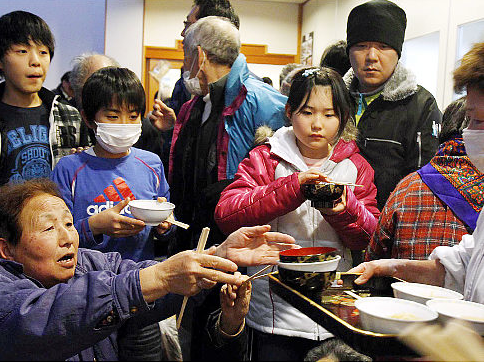
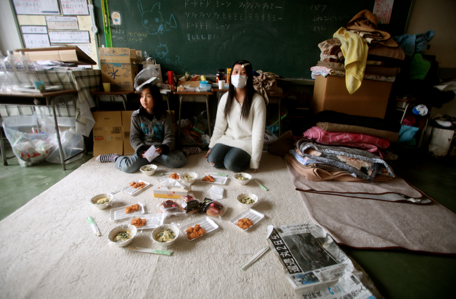
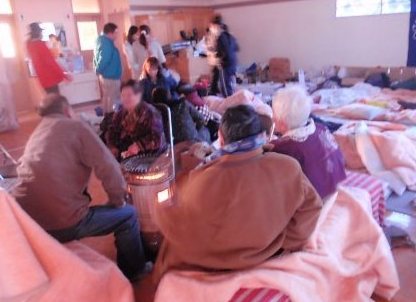
At Matsuiwa elementary school, part of the building continues to be a shelter for those who still do not have homes. According to a teacher, the tsunami wrecked the houses of 130 of the students. When Shanti gave them the study materials set, a teacher told them “I’m glad these came in time for the new first graders who are entering school this year” while in tears.
Another issue they raised was the housing situation; although construction for temporary housing has begun from late March, it is difficult to provide enough housing for the people as Kesen-numa city is located in a rocky location between mountains and the sea. Even when shelters are provided, the staff worry that this will decrease the amount of attention given to older and sick people who will not go out of their houses. They want to address the post-move in care that is necessary.
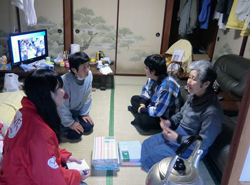
One shelter was located at a crematorium, where the staff talked with a fourth grader, Y. He spoke slowly while telling the staff that “A few days ago, we finished cremating my mother and my two younger sisters.” The mother was taken by the waves while working, and cremated on March 30th. His 4 year old sister was cremated the next day, and his other sister who was just about to enter elementary school was also cremated the following day.
“Before the earthquake, her new backpack arrived to our house. She was so excited to get all of her supplies from the department store as well” he said, before pausing and adding “But the new backpack, house, and my sister were all washed away.” Although he did mention that “My friend still hasn’t been found after his house washed away”, he was still grateful for his father, who was with him in the shelter, and his grandparents who lived in an unaffected area.
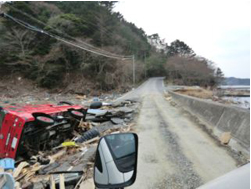
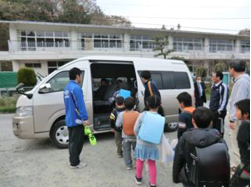
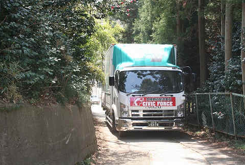
AAR has recently set up a bus system using microbuses, as the roads are still not wide enough to accomodate large vehicles. From April 10th, they have started operating a regular bus system, which carries people to the hospital, train stations, schools, and shopping centers. Especially in an area with many older people who cannot move around easily, these rides are valued very much. One 75 year old lady who used the bus said “I was very happy when I heard about these busses on the radio, as I hadn’t been in the city at all since the quake”.
AAR also reported on the assistance they provided to the disabled and their families who are currently unable to live in shelters. At Ishimaki city, AAR received report of three families with disabled children who were not receiving aid. Due to the nature of their situation, it was hard to live in a communal shelter and thus they moved to this smaller, more private location.
After handing them basic supplies as well as special supplies such as nail clippers and ear cleaners, Ms. Yuko of one of the families showed gratitude, saying “Things needed for emergencies get here, but it’s so inconvenient living withou these small things which were considered normal in life before the earthquake. It’s so unsettling otherwise…” Ms. Niida was forced to move out of the communal shelter after her disabled daughter would start screaming at night. She revealed her worry to them, saying “Families with disabled members have it much harder than normal families. We cannot live in communal shelters where there are lots of people, but there is no where else to go. I don’t know how we can stay in this temporary house, so we’re living every day on the edge.”
It’s hard to provide aid to all people, but these agencies are providing as much assistance as they can, targeting the small but important needs of everyone. Keep supporting them by donating!
It’s been more than a month since the tragedy occurred, and relief efforts are still taking place. Immediate relief efforts are starting to transition into ones that are aimed at recovery. I’ll introduce some here.
ADRA
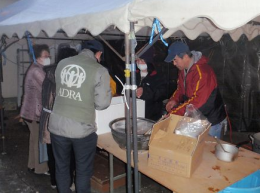
ADRA, which was initially providing hot food and supplies to those affected, started to help facilities clean up the mud and debris that the tsunami brought in. The mud needs to be cleared up as soon as possible to ensure that the unsanitary gunk that is in the sludge will not ruin the facility.
On April 12th, they cleaned up 2 rooms and the kitchen of a nursing home in the area. This process is very physically demanding, as the mud is sticky and cannot be washed away simply with water. The volunteers had to first move out all of the furniture, then shovel out the dirt with small shovels for hours before they could hose the facility down.
Inside the furniture covered with mud, there are many memories of those who lived there. Clearing this out means getting rid of all of their cherished memorabilia, including casette tapes with their favorite songs, books that they have read multiple times, souvenirs from vacation spots. The person who lived in this room said “Before, I could not even touch these things even if people came to help clean up. It’s hard to have the resolve to throw away these things.” The volunteers could not offer any words, but spent their time meticulously cleaning up the room to the best of their abilities. By the time they finished cleaning, the resident thanked them by saying “Thank you. It’s very clean now. I have to keep my head up from now on, don’t I?” The volunteers were touched at the person’s strength to go on despite the severity of the disaster.
Civic recently made a youtube account where you can check out the situation of volunteering that’s happening over there.
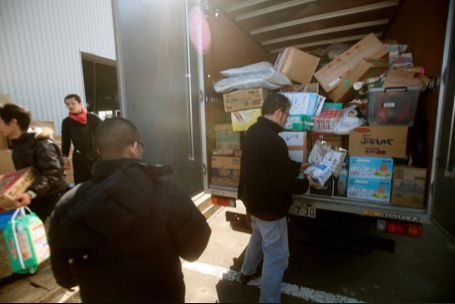
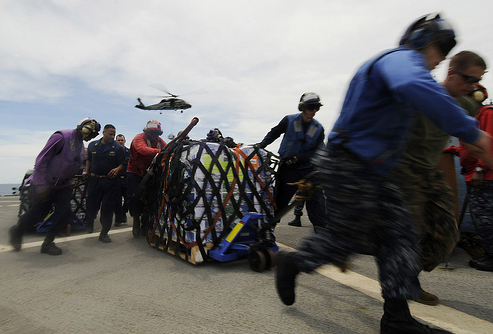
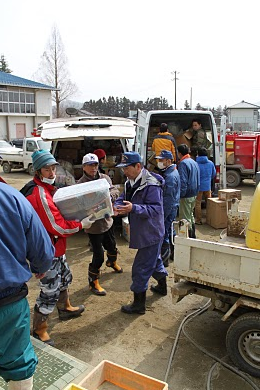
So far, they’ve compiled donations from 85 companies and passed out 209 tons worth of supplies. They recently set up a regular truck shipment to Kesen-numa city, sending 10 4-ton truck filled with supplies everyday.
Civic Force is trying to target smaller shelters that do not receive regular shipments from large organizations; recently, they found a shelter providing assistance to around 300 people that only receives shipments of supplies once every 3 days. Furthermore, the elderly often cannot make the long trek to other supply storage facilities, so this location is their only source of food and other necessities.
Civic Force has received much praise for their quick delivery of necessary goods. At Minami Sanriku-city, some people shed tears at receiving canned tuna, as it reminded them of the tuna that they used to fish in their ports. “I’m truly shedding tears, I’m so glad to be alive” they said, as the truck drivers helping with delivery of the supplies told us “I’m glad I am doing this job”.
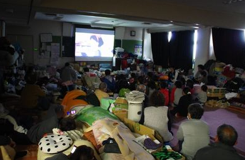
Staying in a shelter for weeks is emotionally exhausting, especially for children who just want to go outside and play with their friends. After hearing these things, Peace Winds Japan wanted to provide the children in these areas with happiness, so they got Studio Ghibli (the studio that made Totoro, Spirited Away, etc.) to provide them with DVDs of their movies along with screening devices.
When the movies were shown on the screen, the children sitting in front and adults resting on the blankets gave cheers as they watched the movies (Totoro and Kiki’s Delivery Service) in earnest.
That’s all for now; as you can see, the recovery efforts are slowly transitioning from relief to recovery oriented actions. Please keep donating to help Japan!
In Japan, there are two types of funds being collected: long term “gienkin” and short term “shienkin”
Organizations such as the Japanese Red Cross and media agencies (newspapers, TV stations) are collecting “gienkin”, which will be compiled to an official distribution organization of each prefecture. The organization, made up of Japan Red Cross, mass media, self-governing bodies of local towns, and specialists, must divide the collected funds equally among areas of the prefecture that are affected the most. However, this deliberation process takes a long time, and there was a case during the Hanshin earthquake where the distribution could not be decided even after a year, becoming a problem at the national assembly.
This is why donations for short-term efforts need to be directly donated to the local NGOs, or otherwise donated to Nippon foundation, a foundation which distributes funds to local NGOs to be used. The Gienkin that you donate to Japan Red Cross will be used all towards their recovery efforts, but it will just take longer.
Also, here is a link to a great blog run by one of our friends who is volunteering in Japan; many pictures and stories directly from organizations she’s working with.
I want to start this post off by introducing a great organization: Globalgiving.org. I am sure many of our readers are aware of this site already, but it is a nonprofit organization that aims to “build an efficient, open, thriving marketplace that connects people who have community and world-changing ideas with people who can support them”. It links the donors to excellent grassroots organizations, and allows for the donors to track what the organizations are doing with their money with regular updates on their site.
After the Japan earthquake/tsunami, Global Giving has set up their own fund, as well as other projects that donors can directly donate to. See how to donate to them at the DONATE TO JAPAN link at the top of our page.
The rest of this post will share a personal story by one of the volunteers, as well as introduce the efforts of some of the organizations that Global Giving is endorsing that we have not reported on yet.
Here’s a list of all of Global Giving’s partners:
Association of Medical Doctors of Asia
Peace Winds
Japan Platform
Save the Children
Telecom for Basic Human Needs
International Medical Corps
Japanese Emergency NGOs
Civic Force
Association for Aid and Relief
Lifeline Energy
Architecture for Humanity
You can see what they have done by navigating with the category links on the right.
International Medical Corps helping in Ogotsu
This touching story that was posted by a volunteer, John Ferguson in International Medical Corps.
…When we arrived, we found that the village had virtually nothing.
Roughly 75 percent of the town had been completely destroyed by the tsunami; 1,300 people are living in 16 evacuation sites, some of which house as many as 600 people. Electricity is available only at sites that have generators, and cell phone service is still out. On top of this, 50 percent of Ogotsu’s population is older than 60, creating a need for consistent medical care and management of chronic illnesses…
The next day, we woke up determined to get what they needed. We bought two washing machines, two water tanks, laundry detergent, hangers, plates, and chopsticks and hit the road back to Ogotsu, where we were directed to one of the 16 evacuation centers.
When we got there, people poured out to see us. A group of ladies soon surrounded me and asked me all kinds of questions. I told them I was from American and came to help. Then one of the ladies said she had lost her daughter to the tsunami. Another woman said she had lost her house and her cat.
Despite their tragic losses, the women were all smiles and giggles. One of the women reminded me that laughter was the best medicine of all, not just for them, but for everyone involved, including me.
I wanted to share this story because I want those who supported our emergency relief efforts in Japan to know that, because of their support, we were not only able to provide the people of Ogatsu with what they needed, but were also able to give them something priceless – hope. They know now that the world cares and is trying to help.
You can read more on what they have done in yesterday’s blog post.
Telecom for Basic Human Needs (BHN)
BHN borrowed an ambulance from a hospital that the head of the organization ran, and sent doctors, nurses, and a telecommunications specialist to Natori-city, Miyagi. At the farm house that the staff stayed at for a night, the staff received rice from the farmer to donate to the people there. After meeting with doctors from Tohoku International Clinic, the team took care of 100 or so patients within the week. Ito, the telecommunications specialist, stayed behind to help out; he was from Ibaragi himself, and his house was affected by the earthquake.The doctors are continuing to go around the severely affected areas in the ambulance to see those who need medical help.
Also, they have released a statement that they will start providing temporary internet facilities near Iwate prefecture to provide aid for the local government there. You can see their website here.
Lifeline Energy
This organization is distributing 15,000 Polaris all-in-one radio, light and cell-phone chargers by early April. This will be extremely important for the people in remote places who still do not have access to current information; the survivors will be able to use the radio to get more information about support services, radiation levels, and other crucial things. The light and phone charger will also help where electricity is still not at its full capability. More updates will presumably come after the Polaris have been distributed. Read more about them here.
Architecture for Humanity
Not many immediate updates yet, as they will enter Japan and start building once Japan transitions from the relief phase to the recovery phase in emergency rebuilding. However, they have already entered Sendai and is conducting door-to-door needs assessments to determine what is necessary to make the rebuilding process as smooth as possible. Not only will they build houses for the displaced, but will also work with professionals to design safe and sustainable community buildings, health clinics, schools, and hospitals. Updates will be posted later on, and you can check their website here.
Please support Global Giving and all of their fantastic nonprofits partners by donating. Click here for our page on a compilation of donation options!
While addressing the physical needs of survivors in the affected areas of Japan is at the forefront of many nonprofits, several have stepped up to focus on a potential injury that is not always immediately obvious: mental health.
International Medical Corps Worldwide
International Medical Corps (IMC) Worldwide is supporting psychological counseling services via telephone. IMC Worldwide, an organization that provides “vital health care that focus on training,” previously supplied mental health guidelines for assisting those affected by the earthquake in Haiti. Their Emergency Response Team now turns to those affected on the “isolated coastal communities north of Sendai, including Ogatsu-machi, Minami-Sanriku, Kesennuma, Riken-Takata, East Matsushima, and areas north of Ishinomaki” and have assessed a that there is a “critical need” to address mental health.
In these assessments, International Medical Corps has identified mental health as a critical need, as fatigue, stress, and insomnia are reported among many evacuees. An increasing number of children are developing asthma, mumps, and pneumonia in Minami-Sanriku evacuation centers, some of which is thought to be the result of stress. Meantime, high levels of anxiety are also prevalent outside of the affected areas as a result of radiation fears.
Here’s an excerpt from an article on NYDailyNews.com quoting Dr. Mutsuo Ikuhara, who is traveling to Japan with IMC:
“I would still think there’s a lot of people in shock and coming to grips with the magnitude of the disaster,” he said. “The disaster seems to be changing moment by moment, so I’d imagine they’d be taking stock on how much damage occurred in terms of surface area and number of family and people affected.”
As the horrific event sinks in, however, Ikuhara said he expected to see people with more stress-related issues.
“Eventually when things stabilize when those life and death issues they’re going to be able to say ‘Oh my god I lost everything’ and that’s usually what affects all of us–that’s when emotions can take control,” he said.
In a trip to Haiti, Dr. Ikuhara witnessed many cases of Post Traumatic Stress Disorders and trauma. Although he says that the Japanese might be viewed from the Western perspective as appearing “stoic,” he notes: “That doesn’t mean they’re not feeling badly.”
IMC has partnered with both Tokyo English Life Line (TELL), an nonprofit that provides free confidential phone counseling (among other services) and Peace Boat, a nonprofit NGO based in Tokyo. IMC will provide training in “Psychological First Aid, computer equipment, and technical support” to bolster telephone counseling services with TELL, as well as help educate communities about available services through handouts and workshops. Peace Boat has been providing “hot meals, non-food items, cleaning services, and other community support activities” to those who are still living in their damaged homes. IMC will contribute “supplies, communications equipment, technology, logistical and possibly technical support in health promotion and reconstruction” to help enlarge Peace Boat’s efforts.
Footage of Peace Boat’s contributions from their website:
AMDA, who as of April 5th has dispatched a total of 114 relief personnel, has:
41 doctors, 20 nurses, 3 midwives, 1 assistant nurse, 3 pharmacists, 2 psychotherapists, 40 coordinators (including assistants and interpreters), and 4 careworkers, according to their most recent update.
An example of their mental health personnel being put to work is in Minamisanriku-cho in Miyagi Prefecture, based in Sizugawa Elementary School in Sanriku-cho, where “a psychiatrist and a psychotherapist in the team are treating those who have symptoms of stress or mental disorder.”
Photos from a recent AMDA update on their website (in English).
Stay updated with AMDA’s efforts and donate to them here.
GreatNonprofits today announced that 82 organizations working on important women’s issues across the country have qualified for the 2011 Top-Rated Women’s Empowerment Nonprofits List based on user reviews submitted during a national campaign in March.
The reviews were posted as part of the 2011 GreatNonprofits Women’s Empowerment Campaign, conducted in partnership with GuideStar and a broad coalition of leaders in the field including, the National Council of Women’s Organizations, the American Association of University Women, the National Coalition Against Domestic Violence, Women’s Funding Network and the National Center for Lesbian Rights.
Over the course of the campaign, more than 120,000 people visited the GreatNonprofits site to read and write reviews. A total of 187 nonprofit organizations working to empower women were rated and reviewed by stakeholders. In the process, a total of 1,558 new user reviews were gathered. All the organizations on the top-rated list received ten or more positive reviews.
During National Women’s History Month, thousands of reviewers helped tell the story of how these organizations serve and empower women around the world. Among the nonprofits making the top-rated list is the Fistula Foundation, an organization committed to providing care for women worldwide suffering from this devastating health issue.
“Once people take time to learn more about fistula and the work we do, they become our biggest champions,” shares Kate Grant, Executive Director of the Fistula Foundation. She adds. “We’ve earned their trust. But we don’t want the American public to just take our word for it. We want people to see for themselves what our volunteers, donors and board leaders have to say. GreatNonprofits is giving a megaphone to those who know us. And we want everyone who cares about the work we do to hear what they have to say. We’re thankful to GreatNonprofits for helping to turn up the volume in this way. Their Women’s Empowerment Campaign is an enormous boost for us, a small but mighty charity doing admirable work and helping restore health and dignity each year for thousands of the world’s poorest women in countries throughout Africa and Asia.”
Diane Dvorin, co-founder and director of Women Work Together agrees. “Qualifying for the 2011 List of Great Nonprofits opens new ways for Women Work Together to cultivate connections with both qualified volunteers and potential donors as we work to expand support for WWT’s leadership development and community building programs with Mayan girls and women in San Pedro Sacatepequez Guatemala.”
The 2011 Women’s Empowerment Campaign ran throughout the month of March 2011, and all reviews submitted appear on both of the GuideStar.org and GreatNonprofits.org websites. The qualifying organizations that received ten or more positive user reviews are listed on the 2011 Top-Rated Women’s Nonprofits List.
Partners in the Campaign
GuideStar
The National Council of Women’s Organizations
American Association of University Women
The National Coalition Against Domestic Violence
Women’s Funding Network
The National Center for Lesbian Rights
Just in time for Earth Day, GreatNonprofits today announced that 50 organizations working to protect and preserve the environment across the country have qualified for the 2011 Top-Rated Green Nonprofits List based on user reviews submitted during a national campaign in March.
The reviews were posted as part of the 2011 GreatNonprofits Green Choice Campaign, conducted in partnership with GuideStar and a broad coalition of leaders in the field including, The Sierra Club and Environmental Volunteers.
Over the course of the campaign, more than 120,000 people visited the GreatNonprofits site to read and write reviews. A total of 128 nonprofit organizations were rated and reviewed by stakeholders. In the process, a total of 1,147 new user reviews were gathered. All the organizations on the top-rated list received ten or more positive reviews.
During the month of March, thousands of reviewers helped tell the story of how these organizations strengthen our environment and our planet. Among the nonprofits making the top-rated list is Panthera, an organization committed to ensuring a future for the world’s largest and most endangered cats through scientific leadership and global conservation action.
“Panthera’s community of supporters is ever-growing,” explains Susie Weller, a coordinator for Panthera, “and it is with the help of platforms like GreatNonprofits that we are able to accelerate awareness and support for our wild cat conservation initiatives. GreatNonprofits is a particularly unique ‘crowd riser’ because reviews of our organization posted on this site reflect the voluntary, genuine and personal accounts of individuals’ experiences with, and perceptions of, Panthera.”
Kieran Suckling, executive director of the Center for Biological Diversity agrees. “It’s an honor to be named one of GreatNonprofits’ top environmental groups for 2011. Because we put the vast majority of our budget toward hiring expert staff to save endangered species and wild places, we don’t advertise or rely on marketing gimmicks. Instead, we count on our enthusiastic supporters to spread the word about what we do. That includes talking with friends and relatives, posting our latest news on social networking sites and sharing their thoughts on how we’re doing on GreatNonprofits’ review section. We’re grateful to get so much positive feedback from our supporters and look forward to many more years of their commitment to our work saving imperiled plants, animals and the places they live.”
The 2011 Green Choice Campaign ran throughout the month of March 2011, and all reviews submitted appear on both of the GuideStar.org and GreatNonprofits.org websites. The qualifying organizations that received ten or more positive user reviews are listed on the 2011 Top-Rated Green Nonprofits List.
Partners in the Campaign
Guidestar
The Sierra Club
Environmental Volunteers
Media Contact:
Emma Bundy
emma@greatnonprofits.org
(510) 504-2048
The Association of Medical Doctors of Asia, an organization that mainly provides medical assistance to countries in times of emergency, sent a team of doctors, nurses, pharmacists, and surveyors to locations in Iwate and Miyagi prefectures; a total of 56 people are now working in the field, and have been able to access even the heavily affected parts with electric cars and helicopters.
They have also been providing medical supplies (medicine, vitamins, masks, IV equipment, flashlights, heat packs) that is needed in the areas hit hardest. Food supplies have also been provided in conjunction with Okayama Cooperative Association, and include 700 instant noodles, 1000 bread rolls, 1100 drinks, 1100 fruits, and other disposable utensils.
Here’s the page where they are updating on the current situation (in English).
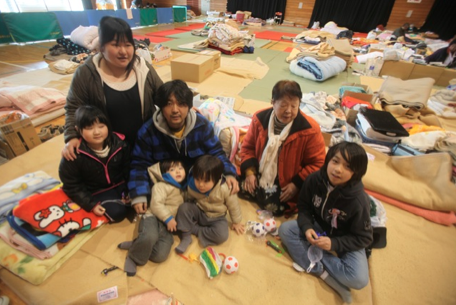
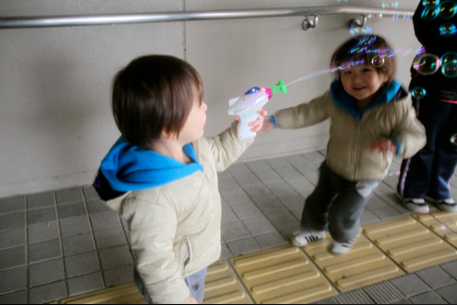
The Matsumoto family is one of many families living in the temporary relief shelters at a local school in Shiogama city.
c
From their blog:
We spoke to Mr. Matsumoto who told us that the first floor of his house was completely inundated with mud from the tsunami. They lost most of their belongings and will never be able to live there again. He seemed slightly lost as he explained that he had no idea how long his family (six members including his wife, grandmother and three children) would need to live in the shelter. He was thankful to Operation Blessing for bringing food and water supplies and said that they felt well cared for under the circumstances.
Operation Blessing International provides food, water, and medical assistance to those in need, and is carrying out disaster relief efforts in Japan. They have been able to deliver these supplies directly to the areas affected in small towns near Sendai, including Otsuchi where half of the 17,000 residents are still missing, and Shiogama, where they are the only organization working for the city of 60,000.
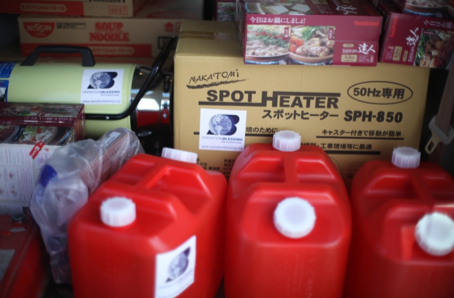
They have been able to provide food, water, kerosene heaters, and other necessary goods in this manner, and will continue to do so. You can read their updated blog here.
ADRA Japan
ADRA organized a food drive for citizens in Sendai, providing hot food for the victims. Hideo Watanabe, Programme Officer of ADRA Japan reported an incident that happened on the 20th:
At around 3PM, a woman around 50 years old fainted due to anemia while waiting in line. Thankfully it was not serious, and we drove her back to her home after having her rest a little.
According to her, she lives alone; although her daughter lives in a nearby city, there is not enough gasoline to use the car and thus the daughter could not reach her mother.
Her house is safe, and although she has electricity and running water, she can only take a bath every four days as she does not know when the gas lines will be repaired. She could not even go far to go buy necessities due to gasoline shortages, and even if she lined up at the store for more than three hours, she could only buy a meager amount of food. In a situation where most of the houses are almost out of food, she was very thankful for the hot meals that ADRA provided.
She continued; “A lot of things are gradually going back to normal. It’s hard living on things you are not used to eating such as dried bread and instant noodles, but I am more fortunate than others in that I have a life and a house. Even if it is only once or twice a day, I am extremely thankful and happy for these hot meals.”
6 year old Kosuke (pseudonym) and his father told us about the earthquake when it hit.
“When the earthquake occurred, I fled with my son and pregnant wife to an elevated location,” said Takahiko, the father. 20 minutes later, the family saw the large waves in front of their eyes.
“The large waves swallowed our house. But right after, a bigger, bigger wave came towards us and swallowed everything. It was so scary. When the water went down and we went to go see our house, there was nothing left, and my favorite toys and collectible cards were gone.
The family is taking shelter at a hospital now. “I want to go home. I want to take a bath and be with my friends,” Kosuke told us. (from their blog)
They also updated how the donations can be used for the children:
3000 yen (app. $37) will buy 3 beach balls, 4 jump ropes, and 3 soccer balls that a group of children can use to move around.
5000 yen (app. $61) will buy 5 notebooks, 12 sets of crayons, 3 sketchbooks, 12 sets of colored pencils, and one pencil sharpener for a group of children to draw with.
10000 yen (app. $123) will buy 2 picture books, 50 sets of origami papers, 3 sets of clay, 4 stuffed animals, 2 sets of board games, and 2 sets of puzzles for a group of children to play creatively with.
Save the Children also set up four “child-friendly spaces” where the children in relief shelters can interact with staff and other children.
Tzu Chi (the name means “Compassion and Relief”) is an international humanitarian organization, and the largest NGO in the Chinese-speaking world. It has many branches in Asia, some of which are in Japan.
Tzu Chi volunteers from Japan and Taiwan delivered 20 tons of relief goods, including instant rice that can be prepared with hot or cold water, nuts, eco-friendly blankets, cloaks and sweat shirts to 7,000 people in shelters in Iwate prefecture. In Ofunato, a city of 42,000 that was decimated by the disaster, and Rikuzentaka, an area that was similarly affected, 19 volunteers distributed 1073 boxes of goods throughout the 25th and 26th.
One seven-year-old boy said: “I am terrified of another tsunami, which could take the lives of everyone. Our school has been destroyed and nobody knows the future.” A lady of 71 with tears in her eyes, said that 16 years ago she had put all her savings into her home: “it vanished in an instant and I do not know how I will pass the rest of my days,” she said.
These volunteers “moved the residents to tears”, and are planning to continue providing aid directly to the victims. You can read their blog here and donate to them here.
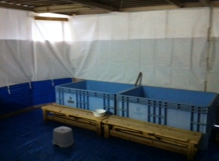
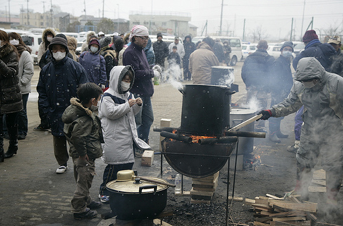
As I was looking through the various reports by the nonprofits, I found that two organizations, Civic Force and Peace Winds were working together in making baths for those still living in shelters. In Japan, taking baths is a very important part of the people’s lives, so this overlooked effort means a lot. Also, these efforts mean that the rebuilding process is just beginning.
In Minamisanriku-chou and Oofunato-shi, construction for baths has started. They made a temporary bath house with 2 baths and a couple of changing booths.
When the architects started construction, the people in the evacuation centers came to watch. One woman said:
“Women take a bath once a week at the bath set up by the Japanese self-defense force (which is only accessible by bus), but the men refrain from taking baths so the women can bathe, even if they have worked hard. I want them to be the ones to bathe first in this new one.”
The staff were touched by the woman’s compassion and thoughtfulness even through the worst situations.
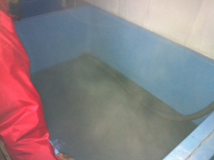
But Civic Force is running into some problems trying to use old boilers that are fueled by wood, as the water continues to be dirty no matter how many times the architects try to fix it. They hope for it to be fixed soon!
Peace Winds
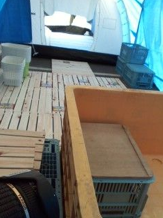
Peace Winds also set up a temporary bath place in Ofunato city:
GreatNonprofits is actively reaching out to people with information about the relief efforts and the nonprofits working on the ground in Japan. Please feel free to contact us with stories, suggestions or feedback.
Here are some organizations that are thinking of sending volunteers to Japan in the future for the rebuilding effort. Most organizations are not sending volunteers yet as it is still extremely dangerous, and citizens outside of Japan are still encouraged to refrain from entering the emergency zone.
CRASH
Christian Relief, Assistance, Support and Hope (CRASH) is a network supporting Christians to do relief work in Japan and around the world. They have a page where they are updating on all of the aid they are currently providing in Japan. Most recently, one of their planned six bases in Meysen Academy (in Sendai city) has been promised two 40-foot containers full of rice and soy, donated from Feed the Hungry. 93 tons of emergency relief supplies are on their way from Yokota Air Base from Samaritan’s Purse.
If you are interested in volunteering with them in Japan, you can sign up to receive more information about it here.
All Hands Volunteers
All Hands Volunteers is an USA-based Nonprofit that provides assistance to those affected by natural disasters with housing, meals, tools, and work. If you want to know more about the situation in Japan from their staff, they have a series of videos uploaded on their site. One is below:
Civic Force Japan is a nonprofit organization in Japan that was established after the Niigata Earthquake in 2004, aiming to provide swift and effective services in case of large-scale crises in Japan through emergency response teams and ensuring communication among partners to mobilize volunteers, funds, and goods. They make sure that the smaller, more obscure locations are not ignored, bringing supplies and services to victims directly if the other organizations could not get around to those locations.
They have partnered up with many organizations to provide supplies to 20,000+ victims in 142 locations, including fuel, 510 stoves, 3000 cans of Japanese grilled chicken, enough Snickers to fill a 4-ton truck, 2000 cups of hot coffee, and 20 tons of rice.
Japan Universal Design Natural Disaster Relief Team
The Japan Universal Design Coordinator Organization (site in Japanese) set up a special relief team based around Tokyo that is currently sending much needed equipment to the isolated, affected areas that are often overlooked by larger organizations or the government. Using facebook to reach out to many individuals, they have volunteers sorting out the emergency relief supplies that have been shipped to them, including food, drinks, gloves, waterless shampoo, socks and underwear. Using their helicopter and trucks, they have been able to reach out to the smaller communities, including one where there was only one can of milk formula for all of the mothers in the community.
No pictures yet, as they will update once Japan transitions from a “life-sustaining” phase to a “rebuilding” phase. You can donate to them via paypal here.
KnK
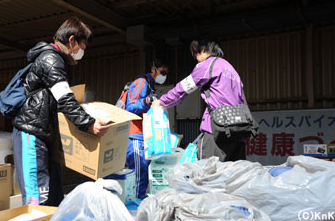
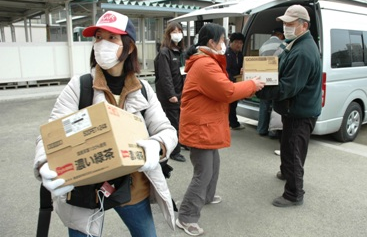
KnK (Kokkyou naki Kodomotachi) or Children without Borders is an organization devoted to supporting disadvantaged children in Asia and raising awareness about their situation, especially in Japan. They have acquired a car to transport various supplies to Ibaraki and Fukushima prefectures, and the first delivery of blankets, diapers, and baby formula (donated from citizens in Tokyo and All Nippon Airways) was made on the 19th to North Ibaraki. They are also planning to send 2 vehicles to Iwate Prefecture on March 26th to provide blankets, diapers, underwear, and other requested items.
They have also started a message project from people all over the world to encourage and comfort the victims, especially the children. You can either post a message on their site here or email them at kodomo@knk.or.jp in jpeg format. The first set of messages got delivered to North Ibaraki, where the victims were deeply touched. You can read the messages here.
Here are the more specific things that these Japanese NGOs have doing in Japan. You can donate to any of these with a credit card.
JEN
NGO JEN helps with emergency assistance in various areas around the world, helping the victims recover both economically and mentally. They have set up a blog here outlining the work they have done onsite so far. They’ve already provided 600 hot meals in Sendai on the 16th, (it was the first hot meal that many had since the quake) sent out three rescue teams, and are gathering emergency relief goods to bring to the victims. Here are some pictures they took from the site:
They provided tea, oranges, bananas and some snacks to evacuees taking shelter at Nakano Junior High School in Sendai city on the 15th.
They also donated 7,200 diapers, 200 pairs of ladies’ underwear, 40 sets of antiseptic alcohol, 1,000 toothbrushes, 50 blankets, and 4 cans of milk to No.2 Elementary School in Onagawa on the 19th. (Onagawa is another area hit hard by the earthquake)
Most recently (on the 22nd), they delivered goods such as diapers for adults and infants, clothes, futon mattress, etc., in addition to water, milk, milk powder, and sweet-bean cake to two small welfare facilities for elderly people in Okawara-town, and the municipal office in Iwanuma City, Miyagi. The contacted facilities will pass on these resources accordingly; one facility is planning to redistribute the goods to approximately 500 survivors living in the neighborhood.
Although there are many international organizations scrambling to collect money for the Japan relief effort, there are many Japanese organizations that are less known here working directly on-site. I’ll do an update on what kind of great things these organizations are doing. Many of them have donation pages open in English now as well.
Compiled by SEEDS Asia, an organization that addresses disaster management and environmental conservation within the Asia Pacific region, this is a very brief rundown of what the main NGOs in Japan are doing at the moment. I will try to update more about each of them.
– AAR (Association for Aid and Relief): fuel, water, food, hygiene products and emergency relief item distribution in Kesennuma, Sendai, Iwanuma and Ishinomaki city, Yamamoto town, Miyagi Prefecture as well as Oduchi town, Iwate Pref.
– ADRA Japan: food and emergency relief item distribution in Sendai, Osaki, Higashi Matsushima city, Miyagi Pref.
– AMDA (Association of Medical Doctors of Asia): doctors, nurses, and coordinators, providing medical assistance and distribution of basic supplies in Sendai city and Minamisanriku, Miyagi Pref and Kamaishi city and Oduchi town, Iwate Pref.
– CARE: emergency relief items arrived Kamaishi city, Iwate Prefecture.
– Child Fund: distributed hygiene products in Minami Soma City, Fukushima Pref.
– Civic Force: relief items continue to reach Kesennuma city. Major companies are providing cash/in-kind donations.
– FIDR (Foundation for International Development/Relief): distribution of snacks in Kesennuma and Minamisanriku, Miyagi Pref., according to Pref., there are many children taking refuge in Minamisanriku.
– Good Neighbors: relief and hygiene products distribution in Oduchi town, Iwate Pref.
– Japan Heart: providing medical care in Miyagi prefecture, disseminating psychological care information through its website
– JEN: food and basic relief items distribution Sendai, Miyagi Pref., accepting listed in-kind donation from public till 24 Mar.
– JIFH (Japan International Food for the Hungry): distribution of food and basic supplies in Sendai city and Date city, Fukushima, and Kesennuma, Miyagi. with international aid workers joining its base camp, relief items are also collected from Western part of Japan and its US partner.
– JPF: distributing food, water in Sendai city, coordinating JPF member organizations.
– JVC: basic medical supply item distribution in Natori city, Miyagi.
– KnK: distribution of basic relief item and baby formula in Kita Ibaraki city, Ibaraki Pref.
– MSF: providing medical assistance and emergency relief items in Tome/Kesennuma city, Minamisanriku cho, Miyagi Pref.
– The NGO collaboration center for HANSHIN QUAKE Rehabilitation/CODE: providing food in Natori city, Miyagi prefecture
– NICCO: medical assistance (including psychological care), toiletries distribution, portable toilet set-up Natori and Iwanuma city, Miyagi Pref. and site investigation in Rikuzentakata city, Iwate Pref.
– Plan Japan: providing psychological care for children at teachers training event, toys and books in Tagajo, Miyagi.
– PWJ (Peace Winds Japan): expanded its operation in Ofunato and Rikuzentakada, Iwate Pref., distribution of relief items, free iridium satellite telephone services and mobile phone charging services in Kesennuma, Miyagi Pref.
– Rocinantes: providing medical assistance in Natori, Iwanuma city, Miyagi Pref.
– Shaplaneer: providing food and relief items in Kita Ibaraki city, Ibaraki Pref.
– SHARE: medical assistance in Natori city, Miyagi Pref., providing medical need information in English
– Shanti: distribution of relief items and food in Kesennuma, Miyagi Pref.
– World Vision Japan (WVJ): distribution of water, toiletries in Tome City and Minamisanriku, Miyagi Pref.
3/22: More current activity
More organizations that are helping out in Japan now.
Save the Children
Save the Children is an organization devoted to providing aid to children who have been displaced by the earthquake/tsunami in Japan. They opened the first child-friendly space in Japan, which are protective environments where children can gather to play and share their experiences under the supervision of their staff. They are collecting donations on their site as well.
This is their blog that covers the work done by Save the Children workers currently in Japan. Here are some pictures below:
3/22: Rescue teams
There are many hands reaching out to Japan now; 128 countries and 33 international organizations have offered their help, whether it is a group of rescue teams, money, gasoline, blankets, rice, water, or rescue dogs.
Here are other great non-governmental organizations helping out with the rescue process in Japan.
Rescue Dogs
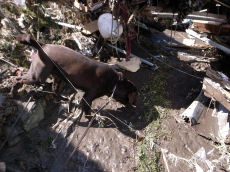
Although they are less in need now, many groups have sent rescue dogs to Japan, contributing to the search for survivors.
The National Disaster Search Dog Foundation sent out six search teams (based in California) to Japan the day the earthquake hit. They have returned now, but here’s a video from their site talking about the help they sent out.
The Disaster Rescue Dog Network (Saigai Kyuujo Dog Network) in Japan sent out 26 people and 23 dogs to various sites in Japan, based around Kesennuma-city, the area hit hardest. They worked through multiple aftershocks and tsunami warnings, and withdrew on the 19th.
The Disaster Rescue Dog Association in Japan (NPO Zenkoku Saigai Kyuujoken Kyoukai) also sent a total of 17 people and 11 rescue dogs to Toyama and Niigata prefectures. They have also withdrawn but contributed to the discovery of many missing people.
3/21: Update by News Manager
This is incredible. An 80 year old woman and her 16 year old grandson were recently found alive, 9 days after the earthquake. Update: Video below!
Shelterbox USA
Shelterbox USA recently shipped out 500 Shelterbox kits to Iwate prefecture in Japan. According to them, they have close to 1,000 ShelterBoxes either in Japan or on their way and another 5,000 ready to move.
(From their site)
Japanese Red Cross Society
(left: A doctor waiting for patients to arrive in the Self-defense force’s helicopter. 3/15/11)
(right: 100,000+ blankets arrive in Japan. 3/12/11)
The Japanese Red Cross Society is putting out many rescue teams to various areas of Japan, including Iwate, Fukushima, Ibaragi, and Miyagi prefectures. There have been a total of 249 rescue teams and 3 emotional help teams out in the field. 122,530 blankets and 20,760 emergency survival kits have been shipped to various areas of Japan as well. (From their site in Japanese)
Additionally, they have a flickr where you can see pictures of the earthquake and relief efforts taking place.
Second Harvest Japan
Second Harvest Japan is a foodbank in Japan that is now distributing food to the relief shelters all over Japan. You can read their disaster relief report blog here and donate here.
(Picture from their site)
ADRA
ADRA Japan is another international NGO that is providing aid. You can read their blog here (English links on the bottom left page). They have been going to Sendai city to provide food to the people living in the temporary relief shelters. Although the site is operating in Japanese, they have set up instructions in English on how you can donate here.
Also, let me know what type of information you would like to see here; I speak Japanese so I would be more than happy to translate any sites that you would like me to translate. – Makiko, GreatNonprofits Japan News Manager
Peacewinds Japan recently donated 400 stoves to various relief shelters in Kesennuma-shi, an area hit extremely hard by the earthquake. They have also gathered donations from other corporations and are in the process of distributing them to these relief shelters.
UPDATE (3/24):
510 more stoves were delivered to various shelters in Miyagi and Iwate prefectures, along with fuel for them. Also, 2300 hot beef bowls were provided to the victims taking refuge at the middle school in Kesennuma city.
GreatNonprofits and GuideStar jointly announce the launch of the second annual Women’s Empowerment Campaign, which seeks to identify top-rated organizations working on women’s issues.
Partners in the campaign, which will run throughout the month of March, include GuideStar, National Council of Women’s Organizations, Women’s Funding Network, the American Association of University Women, the National Coalition Against Domestic Violenceandthe National Center for Lesbian Rights.
A major goal of the campaign is to raise public awareness about the many excellent nonprofit organizations that work on women’s issues and initiatives. Any nonprofit that gets at least 10 new positive stakeholder reviews by midnight, March 31st will be recognized on the GreatNonprofits Top-Rated Women’s Nonprofits List.
“There are so many wonderful nonprofit organizations working on women’s issues from all sorts of perspectives, and last year reviewers spoke up about hundreds of them through their reviews said Perla Ni, CEO of GreatNonprofits. “Through this year’s campaign, we hope to shine a spotlight on their important work and discover even more organizations that work to empower women around the world.
Participants in the campaign can expect to receive increased exposure to donors and volunteers and increased visibility in their communities and the media.
Research conducted by GreatNonprofits indicates that user reviews are can have a wide array of impacts on nonprofit organizations “ from increasing fundraising success to furthering volunteer recruitment and promoting programmatic changes and improvements.
The user reviews gathered by GreatNonprofits are written by anyone with personal experience with a nonprofit, i.e., a donor, volunteer, board member, client, or member of the public.
Over the past year more than 675,000 people visited GreatNonprofits to read and write these reviews. As of now, there are more than 60,000 reviews of some 8,000 organizations.
About the Campaign
The Women’s Empowerment Campaign will run throughout the month of March and all reviews will appear on both the GreatNonprofits.org and GuideStar.org websites. Nonprofits with 10 or more positive reviews will be included on the GreatNonprofits Top-Rated Women’s Nonprofits List. Review submissions must take place from March 1st through 31st, 2010.
Partners:
GuideStar is the leading source of philanthropic information on the web.
National Council of Women’s Organizations is a nonpartisan, nonprofit coalition that represents over 11 million women across the United States. Our over 200 member organizations collaborate through substantive policy work and grass roots activism to address issues of concern to women.
Women’s Funding Network connects and strengthens more than 165 organizations that fund women’s solutions across the globe, making us one of the largest collaborative philanthropic networks in the world.
American Association of University Women (AAUW) is a nationwide network of more than 100,000 members and donors, 1,000 branches, and 500 college/university institution partners. For 129 years, AAUW members have examined and taken positions on the fundamental issues of the day ” educational, social, economic, and political.
National Coalition Against Domestic Violence The Mission of the National Coalition Against Domestic Violence (NCADV) is to organize for collective power by advancing transformative work, thinking and leadership of communities and individuals working to end the violence in our lives.
The National Center for Lesbian Rights is a national legal organization committed to advancing the civil and human rights of LGBT people and their families through litigation, public policy advocacy, and public education. NCLR is litigates precedent-setting cases at the trial and appellate court levels; advocates for equitable public policies affecting the LGBT community; provides free legal assistance to LGBT people and their legal advocates; and conducts community education on LGBT legal issues.
Media Contact: Emma Bundy emma@greatnonprofits.org (510) 504-2048
GreatNonprofits and GuideStar jointly announce the launch of the third annual Green Choice Campaign, which seeks to identify top-rated organizations working on environmental issues.
Partners in the campaign, which will run throughout the month of March, include GuideStar, Environmental Volunteers and the Sierra Club.
A major goal of the campaign is to raise public awareness about the many excellent nonprofit organizations that work on green, sustainable initiatives around the globe. Any nonprofit that gets at least 10 new positive stakeholder reviews by midnight, March 31st will be recognized on the GreatNonprofits Top-Rated Green Nonprofits List.
“There are so many wonderful nonprofit organizations working on environmental issues from all sorts of perspectives, and in our previous campaigns, we’ve heard about hundreds that are doing important work said Perla Ni, CEO of GreatNonprofits. “Through this year’s campaign, we hope to shine a spotlight on these incredible initiatives and discover even more organizations that work to keep our planet green.
Participants in the campaign can expect to receive increased exposure to donors and volunteers and increased visibility in their communities and the media.
Research conducted by GreatNonprofits indicates that user reviews are can have a wide array of impacts on nonprofit organizations “ from increasing fundraising success to furthering volunteer recruitment and promoting programmatic changes and improvements.
The user reviews gathered by GreatNonprofits are written by anyone with personal experience with a nonprofit, i.e. a donor, volunteer, board member, client, or member of the public.
Over the past year more than 675,000 people visited GreatNonprofits to read and write these reviews. As of now, there are more than 60,000 reviews of some 8,000 organizations.
About the Campaign
The Green Choice Campaign will run throughout the month of March and all reviews will appear on both the GreatNonprofits.org and GuideStar.org websites. Nonprofits with 10 or more positive reviews will be included on the GreatNonprofits Top-Rated Green Nonprofits List. Review submissions must take place from March 1st through 31st, 2010.
Partners:
GuideStar is the leading source of philanthropic information on the web.
Environmental Volunteers‘ mission is to promote the understanding of, and responsibility for the environment through hands-on science education.
The Sierra Club: Since 1892, the Sierra Club has been working to protect communities, wild places, and the planet itself. We are the oldest, largest, and most influential grassroots environmental organization in the United States.
Media Contact: Emma Bundy, emma@greatnonprofits.org (510) 504-2048































 Loading ...